Open three listing sites for El Cid in the same afternoon and you will get three different answers to the same question. One site says the median home there is running around $3 million. Another puts it near $5.5 million. A third, checking twelve months of closed sales across every property type in the district, shows something closer to $1.75 million. None of these numbers is wrong. They are measuring different things, and if you do not know which one you are looking at, you will misjudge what a home in this neighborhood actually costs.
That is the real story in El Cid right now, and it matters more than any single price point because it tells you something true about the market itself: this is a small, tightly held pocket of West Palm Beach where a handful of sales in any given month can swing the headline number by a million dollars or more. If you are comparing El Cid to other neighborhoods on your shortlist, the median is the least useful figure you will encounter. What actually sets value here is lot position, condition, and a set of ownership costs that never show up in a listing price at all.
Why the same neighborhood produces five different numbers
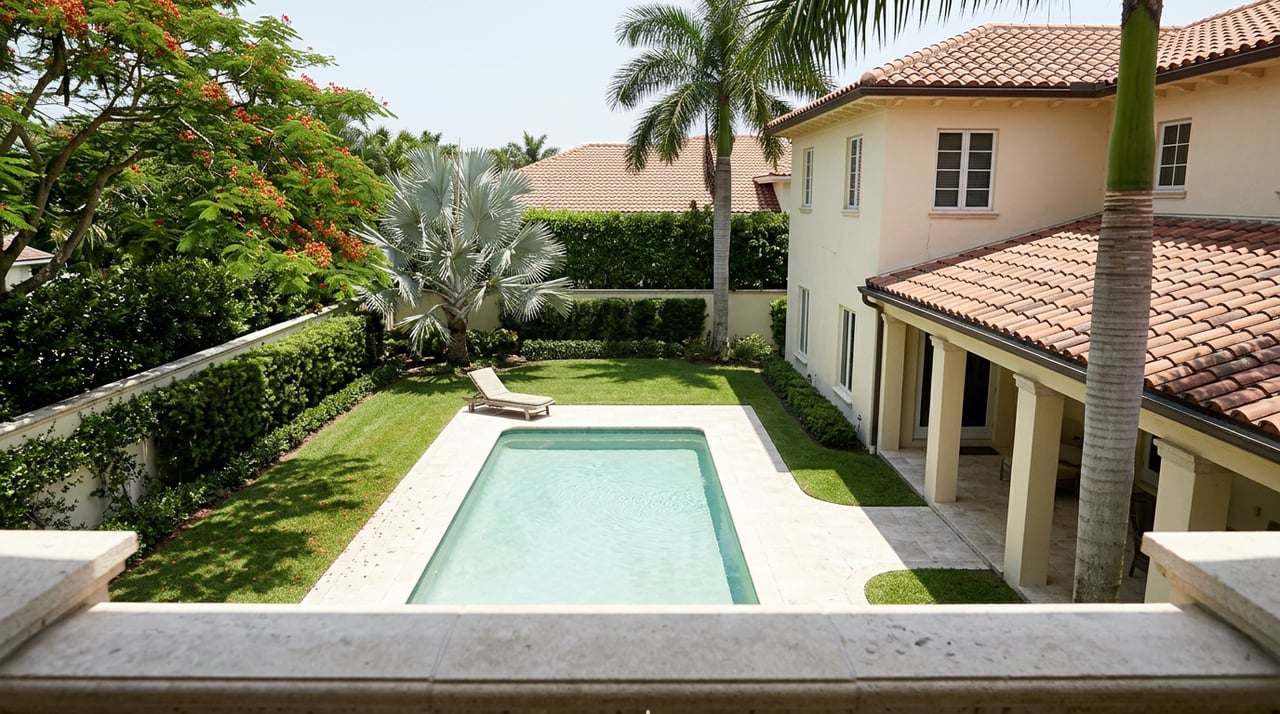
El Cid is a National Register historic district on the west shore of the Intracoastal, home to roughly 281 contributing structures built mostly in the 1920s and 1930s, many of them designed during the Florida land boom by architects like Maurice Fatio and Howard Major. It is small by design. The district's boundaries run along Flamingo Drive, South Flagler Drive, Dyer Road, and South Dixie Highway, and within that footprint there simply are not many transactions in a typical month.
Redfin's own data shows the thinness plainly: over the three months ending April 2026, only 5 homes sold in El Cid, down from 7 in the same window a year earlier, at a median of $3.0 million. A separate live MLS pull as of June 25, 2026 counted just 8 recent closings and landed on a median around $3.1 million. When your entire sample size for a quarter is single digits, one waterfront estate closing in the same month as a modest interior fixer will move the median more than any real shift in the market.
That is the first reason the numbers scatter. The second is methodology, and it is easy to miss if you are just scanning headlines.
List price and sold price are not the same fact
One national portal reported El Cid homes listed to buy for a median of $5.52 million in June 2026. That figure describes what sellers are asking, not what buyers are paying. It is drawn from active listings, and in a market where homes in El Cid have recently spent a median of somewhere between five and six months on market before going under contract, asking price and closing price can drift apart by a wide margin over that stretch.
Compare that to Redfin's $3.0 million, which is a closed-sale figure for the same rough period. Neither number is inflated or understated. They are simply answering different questions: what are sellers hoping for, versus what did buyers actually pay.
The property mix problem
The third source of scatter is what gets counted at all. One portal's trailing twelve month figure for El Cid put the median at $1.75 million across every property type in the district, while a narrower cut of that same data, filtered to single-family homes only, showed a median closer to $3.2 million. The gap is the blend. South Flagler Drive in El Cid carries both historic single-family estates and waterfront condo towers, with condo units on that stretch priced anywhere from roughly $900,000 to $11 million. Fold enough lower-priced condo sales into a "median home price" and you pull the whole number down, even though the single-family stock most buyers picture when they think of El Cid never got cheaper.
Here is how the same neighborhood produces such different headline figures in roughly the same window:
| What's being measured | Reported figure | Time window |
|---|---|---|
| Closed sales, all property types | $3.0 million | 3 months ending April 2026 |
| Closed sales, small live MLS sample | $3.1 million | As of June 25, 2026 |
| Active listing prices, not yet closed | $5.52 million | June 2026 |
| Trailing 12-month closings, all property types blended | $1.75 million | Most recent 12-month pull |
| Same trailing window, single-family only | $3.2 million | Most recent 12-month pull |
None of these is the number you should anchor on. What they collectively tell you is that El Cid does not have one market. It has at least three: interior single-family homes, waterfront single-family estates, and condo units along South Flagler Drive, each with its own pricing logic.
What actually separates value inside El Cid
If the median will not tell you what a home is worth, three things will.
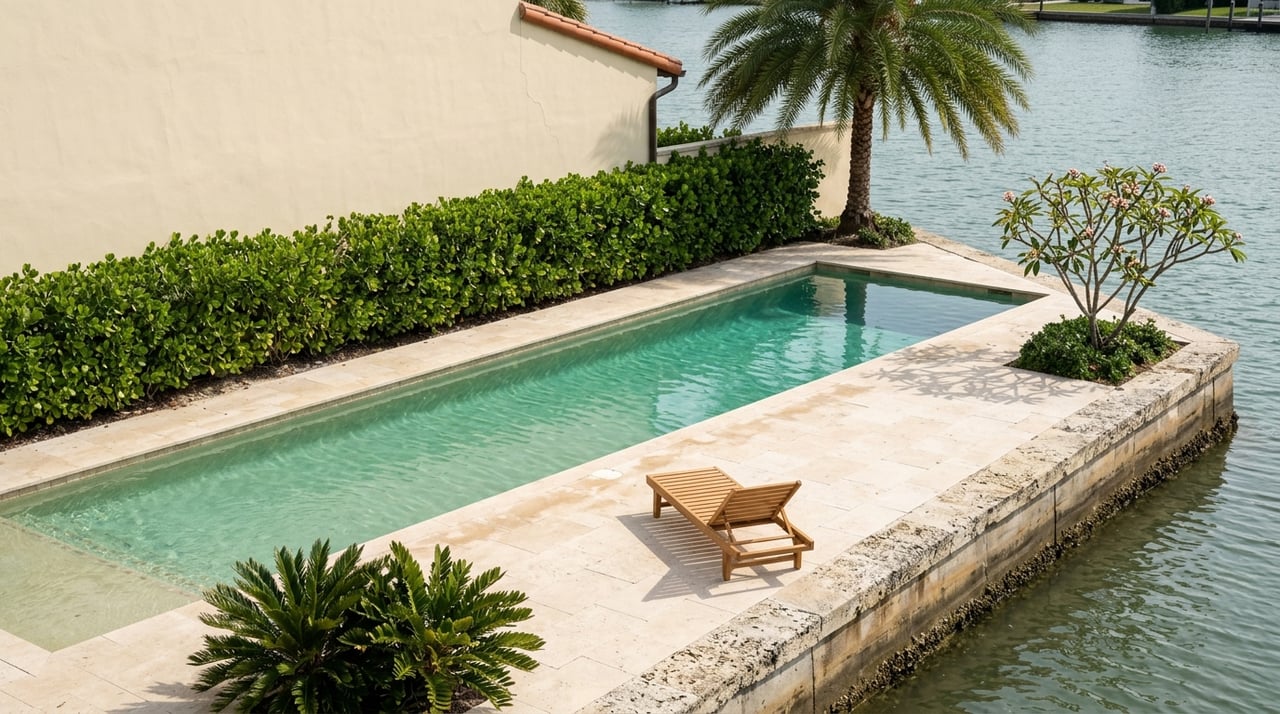
Position relative to the water. Redfin's own data on El Cid's waterfront listings shows a median asking price of $6.79 million for the handful of homes currently for sale directly on the Intracoastal, well above the roughly $3.0 million figure for the neighborhood as a whole. That gap is not a rounding error. It reflects a genuine split between homes on the water and everything on the interior blocks, and it means comping a listing against the wrong tier is one of the fastest ways to misprice an offer in either direction.
Condition, more than square footage. A live read of current El Cid listings and recent sales found that updated homes are asking roughly 63 percent more per square foot than homes in original condition. In a district where most housing stock dates to the 1920s and 1930s, that spread is not surprising, but it means two homes with identical bedroom counts and lot sizes can sit a million dollars apart once you account for whether the electrical, plumbing, and roof have been brought current.
The Certificate of Appropriateness process. Because El Cid is a designated historic district, exterior changes that alter a home's visible appearance generally require a Certificate of Appropriateness from the City of West Palm Beach's Historic Preservation program before work begins. Interior remodeling is not subject to that review. Smaller or less visible projects can often be approved at the staff level, while larger additions or changes to street-facing facades go before the full Historic Preservation Board. If you are budgeting a renovation as part of your purchase decision, this process adds real time to your timeline that a home in a non-designated neighborhood simply would not carry.
The carrying costs the median never shows
There is a fourth factor that shapes what an El Cid home actually costs to own, and it has nothing to do with the purchase price at all. Data on the district's flood exposure puts 81 percent of properties at moderate to severe risk of flooding over the next 30 years, with that risk described as increasing faster than the national average. For homes along the Intracoastal specifically, that translates directly into insurance underwriting, and for coastal properties valued at $1 million or more, hurricane deductibles set at 2 to 5 percent of insured value can run past $50,000 for a single storm event.
None of that appears in a listing price. It shows up months later, when a buyer gets their first insurance quote and realizes the real monthly cost of ownership is meaningfully higher than the mortgage payment alone suggested. If you are comparing El Cid to an inland historic district with similar architecture but no direct waterfront exposure, this is the line item that actually separates the two, far more than whatever median price each neighborhood happens to be reporting that month.
What to do with all of this
If you are looking at El Cid alongside other Palm Beach County neighborhoods, do not lead with the median. Ask which tier of the market a specific listing belongs to. Ask whether the price reflects a closed sale or an active ask. Ask what condition the home is actually in, not just what the square footage says. And get an insurance quote early, before you are deep into an offer, so the real number is on the table rather than a surprise at closing.
El Cid rewards buyers who understand it is not one market wearing one price tag. It is three markets stacked on top of each other, and the neighborhood's real value story lives in the gaps between them.
If you are weighing El Cid against other historic or waterfront pockets of Palm Beach County and want a read on where a specific home actually sits in that structure, Sarah Gandrey can walk through the comps that matter for your situation and help you price past the headline number.